


Technologies

Demand side response and flexible load modelling

Demand side response (DSR) means a site changing when or how much electricity it uses, in response to prices or the grid's needs. Gridcog models load shifting, batteries, demand response contracts and flexibility markets for single sites and portfolios, against real tariffs and prices, so you can see what flexible load is worth before you commit.

What is demand side response?

Demand side response (DSR) is a site changing when or how much electricity it uses in response to price signals or the grid's needs. As the grid takes on more solar and wind, demand has to become more flexible about when it consumes electricity. Flexible loads may be self-dispatched by the site or centrally controlled by system operators.

What counts as a flexible load?

Any load that can move in time or turn down, such as water pumping, thermal storage, refrigeration, heat pumps and EV charging. On-site batteries and generators add flexibility too, by changing what the site draws from the grid. Even shifting routine activities, such as maintenance, away from peak periods can count.

How do sites get paid for demand response?

RouteMarketHow it works
Supplier demand responseMost marketsThe site's energy supplier pays it to reduce demand at high-price times, through the supplier's own programme
P415Great BritainSince 17 November 2024, owners of behind-the-meter batteries, EV chargers, generators and heat pumps can appoint an independent aggregator, a Virtual Trading Party, to trade their flexibility in wholesale markets, separately from their supplier
P510 (proposed)Great BritainWould replace P415's shared compensation pot with bilateral settlement between suppliers and Virtual Trading Parties, counting demand turned up as well as down
Capacity MarketGreat BritainDemand side response earns availability payments, with delivery measured against a baseline during stress or test events
DNO flexibility servicesGreat BritainDistribution network operators pay sites to turn demand down at peak times; UK Power Networks' published rate for LV-connected sites was 3.7p/kWh in early 2025
Wholesale Demand ResponseAustralia's NEMSince October 2021, large users or their Demand Response Service Providers can bid demand reductions into the market, independently of their retailer

How does Gridcog model demand side response?

As part of the site, interval by interval. Flexible loads, batteries, EV chargers and generators sit with the site's fixed load, grid connection and tariffs in one simulation, and Gridcog co-optimises when each flexible asset runs against every price signal the site is exposed to.

01

Flexible loads

Model a flexible load with its daily energy requirement and a schedule of when, and how much, it can run. Restrict it to shifting only earlier or only later, or let it shift freely, and model it on its own or as the flexible part of an existing load.
02

Demand response contracts

Add a Demand Response Contract with optional or mandatory participation, a dispatch threshold and how value is shared: a share of the spot price, a price per MWh or a price per MW.

03

Baselines

Demand response revenue depends on the baseline, the demand the site would have had without flexing. Gridcog calculates a flexible load's baseline with the CAISO 10-of-10 method by default, and our support team can set up an alternative framework.

04

Batteries, EV charging and generators

Co-optimise flexible loads with on-site batteries, smart EV charging and generators, so each asset does what it's best at and the site's total value is clear.

05

Network tariffs and demand charges

Model network tariffs as they're written: time-of-use windows, seasonal peaks, contracted capacity, excess-demand penalties, ratchets and kVA demand. Demand charges can be one of the biggest drivers of the flexibility business case.

06

Aggregators and revenue sharing

Add the aggregator or Virtual Trading Party as a stakeholder, set how revenue is shared with the site, and price energy flows between assets separately where market rules need it.

Modelled in Gridcog

What is a behind-the-meter battery worth with P415?

More than twice as much as bill savings alone, in Gridcog Chief Product Officer Pete Tickler's model of a supermarket in Maidstone, Kent. The same 500 kWh / 250 kW battery was modelled on 2024 prices under four arrangements, from a standard supply contract to full wholesale market access through an aggregator.

Trading across all three wholesale markets earned the most. Solar was left out, so the results show the battery's value on its own.

Value of the battery to the site (£ a year)

Arrangement

Time-of-use supply contract: bill savings only
7,152
Wholesale-priced supply, plus the Capacity Market and DNO flexibility
14,615
P415 through an aggregator, day-ahead hourly market only, plus the Capacity Market and DNO flexibility
16,639
P415 through an aggregator, all three GB wholesale markets, plus the Capacity Market and DNO flexibility
19,885

Working out what your site's flexibility is worth?

Model your flexible assets in Gridcog

How will P510 change flexibility revenue in Great Britain?

Dan Lehmann

Senior Energy Analyst

It would cut what load shifting earns, but make it reflect real market signals. As of October 2026, Elexon was still assessing P510, a proposed change to P415's settlement rules, with a report due to the BSC Panel in February 2027. In a Gridcog model of a 1 MW / 2-hour battery at a small industrial site in North Wales, March 2026 revenue fell from £7,800 under P415 to £1,900 under P510.

Annualised, that's about £92k per MW a year under P415 against about £22k under P510. Under P415, Virtual Trading Parties earn only from turning demand down, and suppliers are compensated from a shared pot that reached almost £5.5m in January 2026. P510 would settle both sides of each load shift bilaterally, between the supplier and the Virtual Trading Party.

Understanding P510: what it is, how it differs from P415, and what it means for asset owners

Which flexibility teams use Gridcog?

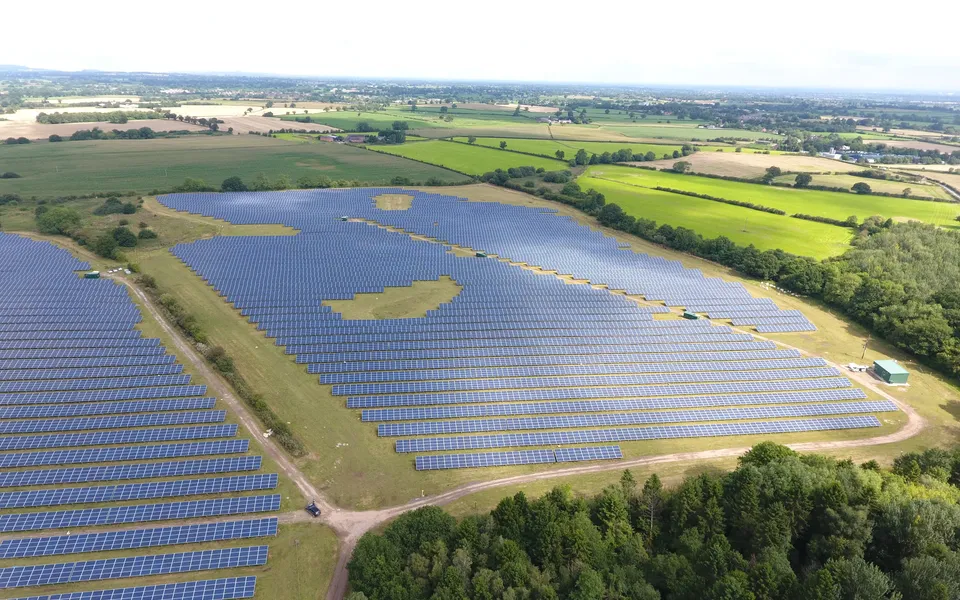
Aerial view of a solar farm in the UK countryside
Behind-the-meter solar and storage, UK

Sustain Commercial Solar

Models solar, battery storage and the full revenue stack, including wholesale trading, Capacity Market income and frequency response, for its commercial clients, and has modelled around 400 MWh of battery storage across 50 sites. Estimates around £27m of investment secured over 12 months.

Who models demand side response in Gridcog?

Large energy users and data centres, the suppliers and aggregators that trade their flexibility, and the consultants who advise them.

Frequently asked questions

Through your supplier, an aggregator or the market directly, depending on where the site is. In Great Britain, routes include supplier programmes, P415 through an aggregator, the Capacity Market and DNO flexibility services. In Australia's NEM, large users can bid into Wholesale Demand Response. Payment usually depends on the demand you shifted against a baseline, multiplied by a price.

The demand a site would have had if it hadn't flexed. Revenue comes from the difference between the baseline and actual demand. Under P415, Great Britain uses Elexon's BL01 method by default: an average of the last 10 working days or 4 non-working days, adjusted on the day. Gridcog uses the CAISO 10-of-10 baseline for flexible loads by default. Read the P415 baselining guide.

A change to Great Britain's Balancing and Settlement Code, live since 17 November 2024. It lets owners of behind-the-meter batteries, EV chargers, generators and heat pumps appoint an independent aggregator to trade their flexibility in wholesale markets, separately from their supplier. The site's supply contract is mostly unaffected, apart from network charges.

Any load that can move in time or turn down without stopping the site doing its job: water pumping, thermal storage, refrigeration, heat pumps and EV charging are common examples. On-site batteries and generators also count, because they change what the site draws from the grid. In Gridcog, you set when and how much each load can move.

Often, yes. In Ashok Willis's model of a London shopping centre with growing load and new public EV chargers, doing nothing left 2.5 MWh of demand unserved by 2035. Adding either a 2 MW / 2-hour battery or flexible load kept all demand within the existing connection limit. Read UK grid under pressure.

They can be one of its biggest drivers. Across 1,950 tariffs with demand charges from 119 networks in 28 countries in the Gridcog Library, the median annual demand charge for a 1 MW load was about €47k, and the 90th percentile about €159k. The rules behind them, such as ratchets and time windows, decide how much flexibility can save.

A mechanism, live since October 2021, that lets large energy users in Australia's NEM, or their Demand Response Service Providers, bid demand reductions into the wholesale market independently of their retailer. Sites must meet strict baselining requirements. Uptake has been slow: 74 MW was registered as of May 2025. Read our guide to Wholesale Demand Response.

Request a live demo

Model your site's flexibility in Gridcog

Request a demo and we'll show you what your flexible loads and batteries are worth in Gridcog.

The team behind Gridcog

Fabian Le Gay Brereton, Chief Executive Officer and Co-Founder of Gridcog

Fabian Le Gay Brereton

Chief Executive Officer & Co-Founder

Previously co-founded Greensense, acquired by ERM Power (now Shell Energy).

Pete Tickler, Chief Product Officer and Co-Founder of Gridcog

Pete Tickler

Chief Product Officer & Co-Founder

Co-founded Greensense and led digital innovation at ERM Power (now Shell Energy).

Genna Boyle, Chief Commercial Officer and Head of EMEA at Gridcog

Genna Boyle

Chief Commercial Officer & Head of EMEA

More than 10 years in energy strategy, trading and renewables, with senior roles at Battery Optimiser and Limejump.