


Technologies

Vehicle-to-grid (V2G) modelling

Vehicle-to-grid (V2G) lets a parked electric vehicle export energy from its battery back to a building or the grid, earning from price spreads and flexibility markets between trips. Gridcog models V2G chargers alongside smart charging, against each vehicle's schedule, so you can compare the cashflows of simple charging and V2G for fleets, car parks and homes.

What is vehicle-to-grid (V2G)?

Vehicle-to-grid (V2G) uses the energy stored in an electric vehicle's battery for something other than driving: exporting it to the grid through the site the vehicle is plugged into. The vehicle charges when prices are low and discharges when they're high, within the limits of its driving schedule.

How does V2G work?

A bi-directional charger lets energy flow both ways between the vehicle and the site. An optimiser, such as an energy supplier or aggregator, decides when each vehicle charges or discharges, using price signals and the charge the driver needs for the next trip. Aggregated, many vehicles can provide grid flexibility and trade in energy markets.

V2G, V2B, V2H and V2X: what's the difference?

TermWhere the vehicle's energy goes
Vehicle-to-grid (V2G)Exported to the grid through the site's connection
Vehicle-to-building (V2B)Used by the building or depot the vehicle is plugged into, cutting its grid imports
Vehicle-to-home (V2H)Used by the home's own load rather than exported
Vehicle-to-everything (V2X)The umbrella term for all of these

How does V2G compare with smart charging?

V2G builds on smart charging. Smart charging changes when a vehicle charges; V2G also lets it discharge. Gridcog runs all three charging modes on the same fleet and schedule, so you can compare their cashflows.

Charging modeWhat it doesWhere the value comes from
Impatient chargingCharges each vehicle to full as soon as it plugs inThe baseline: no optimisation
Smart chargingMoves charging into the cheapest periods the vehicle's schedule allowsLower energy supply and network costs
Bi-directional (V2G) chargingSmart charging, plus discharging to the site or the gridLower costs, plus revenue from price spreads and flexibility markets

How does Gridcog model V2G?

As part of the site, interval by interval. Each vehicle's schedule, the chargers, the grid connection, tariffs and markets sit in one simulation, and Gridcog co-optimises when every vehicle charges and discharges.

01

Vehicle schedules

Enter each vehicle's daily energy use, battery capacity, maximum charge power and an hourly schedule of when it's plugged in, or upload them from the Excel template for larger fleets. Gridcog only charges and discharges a vehicle while it's plugged in, and you can set a minimum state of charge for V2G.
02

Bi-directional chargers

Set charger size, number of chargers and a maximum demand across all of them. Then turn on bi-directional charging so vehicles can discharge to the site (V2B) or the grid (V2G). Charger capex and opex come from rate cards, so V2G hardware costs sit in the cashflows.

03

Tariffs and markets

Value V2G against retail and network tariffs and wholesale prices, with trading across day-ahead and intraday markets, and balancing, capacity and frequency response markets where the market allows it.

04

Solar, batteries and the grid connection

Model V2G with on-site solar, a stationary battery, the site's existing load and its import and export limits. You'll see what the connection allows before you ask the network operator for more capacity.

05

Stakeholders and commercial models

Add the fleet operator, charge point operator, supplier or aggregator as stakeholders, split the value between them, and set which one each flexible asset optimises for.

06

Results

Compare cashflows and net present value (NPV) for impatient charging, smart charging and V2G, with interval-level charging and discharging profiles.

Modelled in Gridcog

How much could a V2G car earn for its energy supplier?

£526 to £1,015 a year, depending on market exposure, in Gridcog Senior Energy Analyst Ashok Willis's model of the Octopus x BYD Dolphin V2G scheme in Great Britain. That excludes the wider portfolio benefit to Octopus, which he describes as likely to be material.

On days with small price spreads, the car followed its driving pattern and didn't trade. On days with big spreads, it charged and discharged as fast as the charger allowed.

One V2G-enabled BYD Dolphin, Great Britain

The scheme
Octopus Energy leases the car with free home charging for £300 a month; it must be plugged in for at least 12 hours a day on average and use no more than 210 kWh a month
Set-up
Plugged in from 6pm to 7am on weekdays; minimum state of charge of 20%; prices from July 2024 to June 2025
Baseline
A petrol equivalent of the BYD Dolphin plus fuel, with home electricity on the residential price cap tariff
Scenarios
Day-ahead hourly trading; adding day-ahead half-hourly and intraday continuous trading; adding the Balancing Mechanism, Capacity Market and static firm frequency response (SFFR)
Result
£526 to £1,015 per vehicle per year compared with the baseline, depending on market exposure
Not included
Charger hardware costs, imbalance savings and the portfolio benefit to Octopus

Planning V2G for a fleet, car park or customer base?

Model V2G in Gridcog

Which sites suit V2G?

Sites where vehicles stay plugged in for long, predictable periods. Gridcog's analysts have modelled V2G at car parks, fleet depots and homes.

Long-stay car parks

Catalina Villaro modelled a long-stay car park in Australia with 10 cars, comparing smart chargers with V2G chargers at 7 kW each. The V2G site had up to 70 kW of import and export, subject to connection approval. Predictable stays suit energy arbitrage, but charger costs could move the breakeven point. Operators could offer free parking or an incentive payment to drivers who join.

Fleet depots

Pete Tickler modelled eight electric refuse trucks, each with a 300 kWh battery, on five 100 kW chargers and a 500 kW connection at depots on Australia's east coast. Smart charging cut energy supply costs by over 63%, and V2G discharged the trucks when it improved the financials, while keeping enough charge for the next shift.

Which e-mobility teams use Gridcog for V2G?

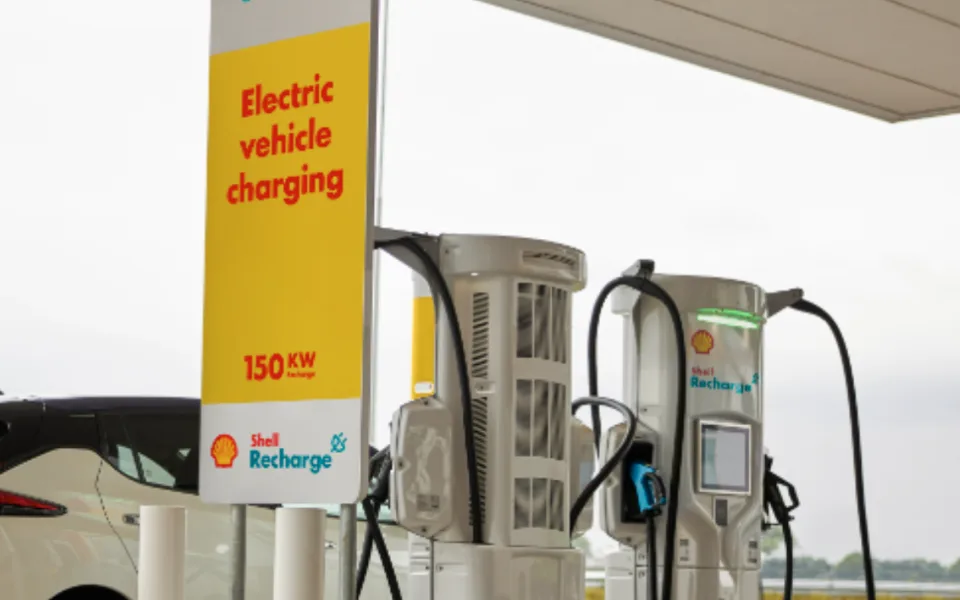
Shell Recharge fast chargers on a forecourt
Forecourt and fleet charging, the Netherlands

Shell

Shell's e-mobility team used Gridcog to model hundreds of forecourt scenarios with fast chargers and battery storage, and to explore how fleets could contribute to the bottom line through vehicle-to-grid.

Who models V2G in Gridcog?

Fleet operators and charge point operators, large energy users with vehicles on site, and the energy majors and suppliers that trade their flexibility.

Frequently asked questions

Only vehicles and chargers that both support bi-directional charging, and the list changes as manufacturers add the feature. Check the vehicle, the charger and the supplier or aggregator scheme together. Octopus Energy's BYD Dolphin scheme, for example, bundles a V2G-enabled car, home charging and the tariff into one lease, with Octopus deciding when the car charges.

V2G exports the vehicle's energy to the grid; vehicle-to-home (V2H) uses it to supply the home's own load. Exports can earn from wholesale and flexibility markets, while V2H cuts the electricity the home imports. Gridcog models both: discharging to the site's own load, as V2B or V2H, or exporting through the grid connection as V2G.

By charging when energy is cheap and discharging when it's expensive, and by selling flexibility. In Ashok Willis's model for Great Britain, that meant wholesale trading, the Balancing Mechanism, the Capacity Market and frequency response. In Catalina Villaro's model for Australia, the site traded wholesale price spreads under a network tariff that rewards flexibility.

It depends on the market, the vehicle's schedule and the charger costs. In Gridcog's models, the Octopus x BYD Dolphin scheme could make £526 to £1,015 per car per year for Octopus. For fleet depots, V2G adds value on top of smart charging, which alone cut a depot's energy supply costs by over 63%. Neither model included charger hardware costs.

Bi-directional chargers, vehicles that support V2G, approval from the network operator to export, and a tariff or market arrangement that pays for flexibility. In Catalina Villaro's car park model, the V2G site assumed access to the wholesale energy market and a network tariff that rewards flexibility, similar to those available to community batteries.

It shouldn't, because V2G only runs within the vehicle's driving pattern. In Gridcog, each vehicle's schedule sets when it's plugged in and how much energy it needs before it leaves, and the optimiser aims to keep a minimum state of charge. Ashok Willis's model kept a minimum of 20%; Pete Tickler's depot model made sure every truck had enough charge for its next shift.

Yes. Enter each vehicle's daily energy use, battery size, charge power and hourly schedule, or upload them from the Excel template for larger fleets. Gridcog co-optimises charging and discharging across the fleet with on-site solar, batteries and the site's load, within the grid connection's import and export limits.

Request a live demo

Model V2G in Gridcog

Request a demo and we'll show you how Gridcog values V2G for your fleet or site.

The team behind Gridcog

Fabian Le Gay Brereton, Chief Executive Officer and Co-Founder of Gridcog

Fabian Le Gay Brereton

Chief Executive Officer & Co-Founder

Previously co-founded Greensense, acquired by ERM Power (now Shell Energy).

Pete Tickler, Chief Product Officer and Co-Founder of Gridcog

Pete Tickler

Chief Product Officer & Co-Founder

Co-founded Greensense and led digital innovation at ERM Power (now Shell Energy).

Genna Boyle, Chief Commercial Officer and Head of EMEA at Gridcog

Genna Boyle

Chief Commercial Officer & Head of EMEA

More than 10 years in energy strategy, trading and renewables, with senior roles at Battery Optimiser and Limejump.