

Technologies

Co-located battery storage and hybrid project modelling

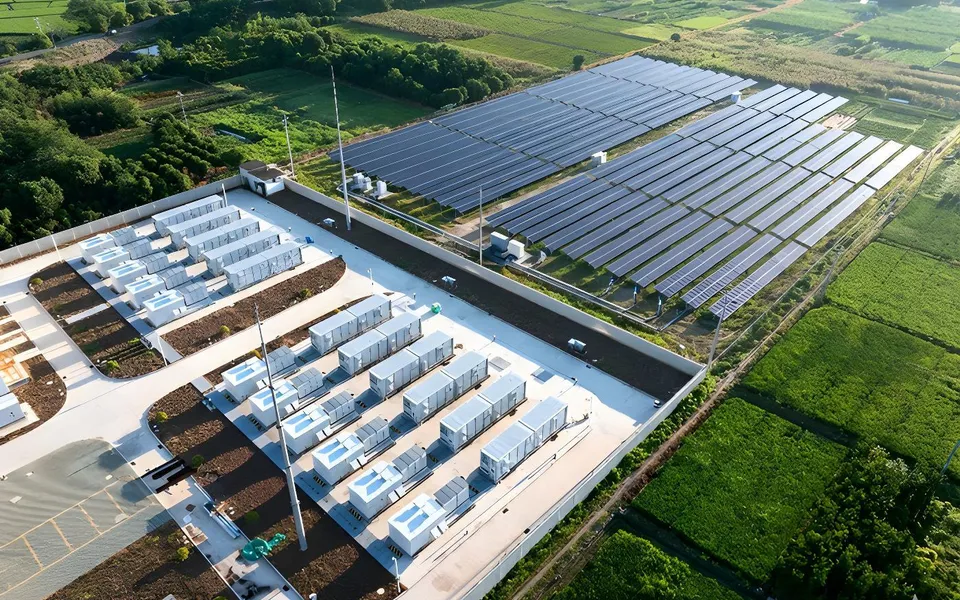
Co-located battery storage puts a battery on the same grid connection as a solar or wind farm, as a retrofit or on a greenfield site. Gridcog models the shared connection, the battery's charging rules and any power purchase agreement (PPA) or subsidy on the renewable asset. It then autosizes the battery against the site's prices and costs.

What is co-located battery storage?

A co-located battery shares a grid connection point with a solar or wind farm. It can store output the connection can't export, or that would sell at negative prices, and discharge it later. Some co-located batteries charge only from the renewable asset; others can also import from the grid, depending on the market's rules and the renewable asset's contracts.

Developers build co-located projects in two ways.

RetrofitGreenfield
What it isA battery added to an operating solar or wind farmA new site with generation and storage planned together
Why developers do itTo use the existing grid connection and cut exposure to negatively priced hoursTo design the connection, generation and storage from a blank slate
Contracts to work aroundThe existing PPA or subsidy, which may give the renewable asset first right of way over the grid connectionNone: choose between revenue floors, tolling agreements, baseload or peakload PPAs and full merchant co-optimisation
Example modelled in Gridcog110 MW Wemen Solar Farm, Victoria: about 163 MW of 4-hour storage recommendedmeteocontrol: 53 MWp of solar and a 120 MWh battery in Saxony-Anhalt, modelled across two construction phases

How does Gridcog model a co-located battery?

As one site behind one grid connection, interval by interval. The solar or wind farm, the battery, the connection limits and the offtake contracts sit in one simulation, and Gridcog co-optimises when the battery charges, discharges and trades.

01

Shared grid connection

Set the site's export and import limits at the point of connection, or a schedule for flexible and dynamic connections such as flexible connection agreements in Germany. Gridcog limits the combined export of generation and storage, and shows how much output the battery absorbs that would otherwise be curtailed.

02

Green and grey charging rules

Battery Charging Options set what the battery can charge from: the grid, all on-site renewable generation, generation in negative-price intervals only, or excess generation above the export limit. That covers green batteries that charge only from the co-located asset and grey batteries that also import from the grid.

03

PPAs and subsidies with negative-price clauses

Attach a PPA, a contract for difference (CfD) or a subsidy such as Germany's market premium under the Renewable Energy Sources Act (EEG) to the renewable output. Gridcog's Negative Price Adjustment models knock-out clauses, including how many negative intervals it takes to trigger them.

04

Battery autosizing

Gridcog's autosizing finds the battery size, and the solar or wind size if you want it to, that gives the highest net cashflow. It weighs capex and opex, the project's length, grid constraints and every price signal the site is exposed to.

05

AC-coupled or DC-coupled

Give the battery its own inverter, or let it share the solar inverter in a DC-coupled design. With Gridcog's solar modelling, DC clipping and efficiency losses are calculated automatically and used to charge the DC-coupled battery, within the system's power limits.

06

Revenue stacking and curtailment

Model wholesale, ancillary, balancing and capacity revenues for the battery, and let the solar or wind farm turn down when prices go negative. Results show cashflows, internal rate of return (IRR) and net present value (NPV) for each stakeholder, with interval-level energy flows between the assets.

Modelled in Gridcog

How much more can a co-located battery earn under Germany's MiSpeL rules?

In a Gridcog model of a 10 MW, 2-hour battery co-located with 12 MWp of solar, MiSpeL earned about €2.33m a year. Running fully merchant earned €2.25m, and green-only €1.70m. MiSpeL (Market Integration of Storage and Charging Points) lets a co-located battery import from the grid. It keeps the EEG market premium on the share of exports that came from the solar plant.

Gridcog Senior Energy Analyst Daria Ekimova compared three ways to run the same battery.

ScenarioWholesale (€m)Ancillary (€m)EEG (€m)Total (€m a year)
Green1.370.190.141.70
Merchant1.710.54None2.25
MiSpeL1.690.510.132.33

MiSpeL earned the most and worked the battery harder, with more cycling through the low-yield winter months. The post also sets out the practical limits, including metering requirements and grid connection limits.

10 MW, 2-hour battery with 12 MWp of solar, Germany

Set-up
Front-of-meter battery, co-located with 12 MWp DC (10 MWac) of solar
Prices
German market prices for the 12 months from September 2025 to September 2026; EEG market premium of €60/MWh
Green
Charges only from the solar plant; keeps the EEG premium on everything exported
Merchant
Imports from the grid; loses EEG eligibility on all exports
MiSpeL
Imports from the grid; keeps the EEG premium on the share that came from the solar plant
Not included
Behind-the-meter set-ups

Adding a battery to a solar or wind farm?

Model your co-located project in Gridcog

Which revenue model suits a co-located project?

Laura Hoffmann-Ostenhof

Central Europe Industry Lead

It depends on risk appetite, access to grid capacity and demand for corporate offtake. Gridcog Central Europe Industry Lead Laura Hoffmann-Ostenhof compared four revenue models for co-located solar and storage in Germany (November 2025).

Revenue modelHow it worksTrade-off
Subsidy-backed innovation tendersFixed subsidies for 20 years, with premiums often around 6 to 9 euro cents per kWhBankable and lower risk, but the battery can't import from the grid
Shared infrastructure and cable poolingGeneration and storage oversized on one grid connection to use its spare capacityLower connection costs and better utilisation, but returns stay capped by the renewable output profile
Fully merchant co-optimisationThe connection is optimised across day-ahead and intraday wholesale markets and ancillary services such as frequency containment reserve (FCR) and automatic frequency restoration reserve (aFRR)The highest revenue potential in Gridcog's model of a 50 MW, 1-hour battery with 75 MW of solar, but volatile and harder to finance
Partially merchant with a hybrid PPAPart of the output is sold under a corporate or long-term PPA; the battery trades when it isn't serving the contractPPA stability, with room for market upside

Which teams model co-located projects in Gridcog?

EPC contractors, developers and technical advisors in Germany. Two have published how.

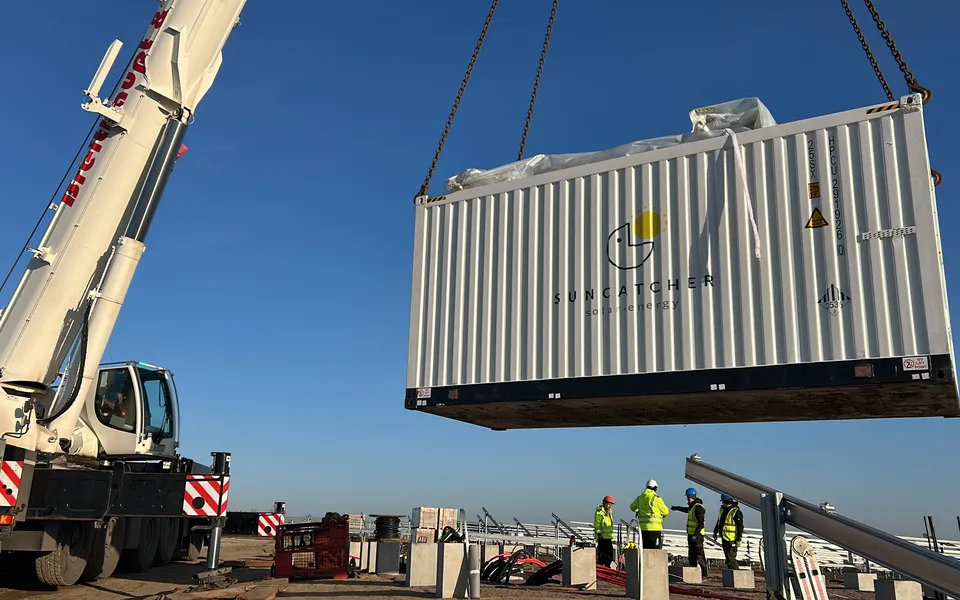
A crane lifting a battery storage container on a solar farm construction site
EPC contractor for battery projects within the SUNCATCHER Group, a developer and independent power producer (IPP), Germany

SUNCATCHER Engineering

Models standalone batteries and batteries co-located with solar or wind, including 55 MWh of green battery capacity added to an operating solar plant in Germany.

‘No matter how complex a project is, we've always found a way to model it in Gridcog.’
Lucas Dziadek, Project Manager
Battery storage containers beside a large solar farm
Technical consulting, Germany

meteocontrol

Runs battery energy storage system (BESS) revenue assessments for standalone and co-located projects, green and grey. For a 53 MWp solar and 120 MWh battery project in Saxony-Anhalt, the team compared storage sizes against the planned solar capacity across two construction phases.

‘Storage has become a mandatory component for any project that wants a credible route to market.’
Peik Uhr, Senior Business Development Manager for Technical Consulting

Thinking Energy with Gridcog's experts

Short explainers from Gridcog's energy analysts on battery retrofits, co-location and offtake.


Retrofitting a battery to the Wemen Solar Farm

Scott Bosman, Senior Energy Analyst, on curtailment at a 110 MW solar farm in Victoria and how big a battery should be. Read Scott's Wemen Solar Farm analysis.


The economics of co-located solar and battery storage in Germany

Four revenue models for co-locating solar and batteries in Germany, from subsidy-backed innovation tenders to fully merchant co-optimisation. Read the German co-location breakdown.


How to model offtake contracts and subsidies for co-located projects

How existing PPAs, subsidies and negative-price clauses change a battery retrofit, and how to test offtake options for a greenfield site. Read the offtake contracts guide.

Who models co-located battery storage in Gridcog?

Renewable developers and IPPs, investors, energy majors and the consultants who advise them.

Frequently asked questions

It depends on the market's rules and the renewable asset's contracts. In Germany, a green battery charges only from the renewable asset; under MiSpeL, a co-located battery can also import from the grid and keep the EEG premium on solar-origin energy. In Ireland, an April 2026 decision by the Commission for Regulation of Utilities (CRU) allows a shared connection, but batteries can't yet charge from renewable generation.

The size that gives the site the highest net cashflow, which varies from site to site. Gridcog's autosizing tests sizes against capex, opex, grid limits and prices. For the 110 MW Wemen Solar Farm, it recommended about 163 MW of 4-hour storage. That shifted 21 GWh, or 23% of solar exports, through the battery into non-negative price intervals. Read the Wemen Solar Farm analysis.

The battery has to work around it. Pay-as-produced PPAs often give the renewable asset first right of way over the grid connection. Subsidies such as the CfD in Great Britain and the EEG in Germany knock out during negative reference prices, and newer PPAs carry their own negative-price clauses. Gridcog models these clauses, so you can test battery sizes against the contract you already have.

Yes, in Gridcog's German modelling. Daria Ekimova ran a 100 MW solar plant in southern Germany under curtailment schedules of 669 to 1,160 hours a year. Standalone, the plant lost up to 35% of its wholesale revenue. With a co-located battery, losses were 6% at most compared with the uncurtailed baseline, and the battery absorbed much of the curtailment even without a grid import connection.

An AC-coupled battery has its own inverter; a DC-coupled battery shares the solar farm's inverter. In a DC-coupled design, the battery's power is the lower of its own rating and the inverter's spare capacity. It can also charge from solar output the inverter would otherwise clip. Gridcog models both, so you can compare them on the same site.

Not always. Co-location shares a grid connection and can capture curtailed output, but the renewable asset's contracts and connection rights can limit how the battery runs. In Laura Hoffmann-Ostenhof's German model, fully merchant co-optimisation had the highest revenue potential and the least certain cash flows. Gridcog models standalone and co-located batteries in one project, on the same prices.

Gridcog models 40+ electricity markets, including Great Britain, Ireland, Germany, Spain, Australia and New Zealand, each with its own market rules, network tariffs and price data. Gridcog's analysts have published co-location studies for Germany, Ireland, Great Britain and Australia, and customers including SUNCATCHER Engineering and meteocontrol model co-located projects in Germany. Explore the markets Gridcog models.

Request a live demo

Model your co-located project in Gridcog

Request a demo and we'll show you how Gridcog sizes a battery for your solar or wind farm.

The team behind Gridcog

Fabian Le Gay Brereton, Chief Executive Officer and Co-Founder of Gridcog

Fabian Le Gay Brereton

Chief Executive Officer & Co-Founder

Previously co-founded Greensense, acquired by ERM Power (now Shell Energy).

Pete Tickler, Chief Product Officer and Co-Founder of Gridcog

Pete Tickler

Chief Product Officer & Co-Founder

Co-founded Greensense and led digital innovation at ERM Power (now Shell Energy).

Genna Boyle, Chief Commercial Officer and Head of EMEA at Gridcog

Genna Boyle

Chief Commercial Officer & Head of EMEA

More than 10 years in energy strategy, trading and renewables, with senior roles at Battery Optimiser and Limejump.