

Durations side by side
Set up one scenario per duration, for example 2, 4 and 8 hours, and keep every other input the same so the comparison isolates duration. Size each battery by power and duration, or by storage and duration.
Technologies
Long duration energy storage (LDES) discharges at full power for longer than the one to four hours typical of lithium-ion batteries. Ofgem's definition for Great Britain is eight hours or more. Gridcog compares battery durations on forward price projections, capacity market de-rating and degradation, so you can see when longer duration earns its extra cost.
In June 2026, Ofgem provisionally selected 16 projects for the first window of its LDES cap and floor scheme. They total about 7.6 GW, with durations of 8 to 22 hours.
In February 2026, New South Wales contracted six lithium-ion batteries in its largest long duration storage tender: 1.17 GW / 11.98 GWh, about 10 hours on average.
Gridcog Chief Product Officer Pete Tickler modelled a 100 MW battery in New South Wales on three price projections. All three sustained price spreads for 4 and 8 hours, and in some cases 12.
Long duration energy storage (LDES) stores electricity and releases it over many hours, moving energy from cheap periods, such as sunny middays, into evening and overnight peaks. Ofgem defines LDES as storage that can discharge for eight hours or more. Lithium-ion batteries typically run for one to four hours, and the operational utility-scale batteries in Australia's National Electricity Market (NEM) were all one to two hours in early 2025.
Duration is the time a storage asset takes to charge or discharge at maximum power: its energy capacity (MWh) divided by its power (MW). A 100 MW battery with 800 MWh of storage has an eight-hour duration. More in our guides to energy storage duration and MW vs MWh.
Four technologies made Ofgem's June 2026 shortlist for Great Britain's LDES cap and floor scheme, and lithium-ion took most of the places.
| Technology | How it stores energy | Projects in Ofgem's window 1 shortlist (June 2026) |
|---|---|---|
| Lithium-ion batteries | Electrochemical cells; a longer duration adds energy capacity for the same power | 11 |
| Pumped storage hydro | Pumps water to an upper reservoir and releases it through turbines; Dinorwig in Wales stores 9.1 GWh | 3 |
| Compressed air energy storage | Stores energy as compressed air and releases it through a turbine | 1 |
| Vanadium flow batteries | Stores energy in liquid electrolytes held in tanks; energy capacity grows with the size of the tanks | 1 |
As a battery with the duration, efficiency and degradation of the technology you're assessing, dispatched interval by interval against every market it can earn from. You can compare durations side by side in one project.
Set up one scenario per duration, for example 2, 4 and 8 hours, and keep every other input the same so the comparison isolates duration. Size each battery by power and duration, or by storage and duration.
Run each duration on historical prices, or on your own or third-party price projections added to the Gridcog Library. Pete Tickler's New South Wales model used three projections from Endgame Analytics.
Set round trip efficiency, self discharge per day, depth of discharge and daily cycle limits for the technology you're assessing. Gridcog's battery asset represents lithium-ion, flow and other battery chemistries, and its flexible parameters can represent other storage, such as compressed air.
Degrade storage capacity, power capacity and round trip efficiency on separate schedules, so you can see how duration changes as the asset ages. Capacity changes model augmentation, such as topping up storage lost to degradation.
Capacity markets de-rate storage by duration. Gridcog applies de-rating factors by duration and auction, so you can see what each extra hour adds in capacity revenue.
Put long duration storage on the same grid connection as a solar or wind farm, including batteries that charge only from on-site renewables. See how much curtailed output each duration captures. More on co-located battery storage.
Modelled in Gridcog
The price patterns now support them in New South Wales. Gridcog Chief Product Officer Pete Tickler modelled a 100 MW battery at different durations on three price projections. All three sustained intraday price spreads for 4 and 8 hours, and in some cases 12.

Pete Tickler
Chief Product Officer
Read Pete's analysis: the age of long(er) duration BESS has arrived for Australia's NEM
100 MW battery, New South Wales
Weighing up a 4-hour battery against an 8-hour one?
Model your storage project in GridcogGreat Britain and New South Wales both run schemes that contract long duration storage, and capacity markets give longer durations higher de-rating factors.
The cap and floor gives a project a minimum revenue, the floor, topped up through consumer bills if market revenue falls short. Above a cap, extra revenue is shared with consumers. On 26 June 2026, Ofgem provisionally selected 16 projects for the first window, totalling about 7.6 GW and 136.9 GWh. Ofgem expects to make final awards in autumn 2026.
ASL (formerly AEMO Services) runs tenders for long-term energy service agreements (LTESAs) under the NSW Electricity Infrastructure Roadmap. Its largest long duration storage tender, announced in February 2026, contracted six lithium-ion batteries totalling 1.17 GW / 11.98 GWh. That's about 59% of the state's minimum objective of 2 GW / 16 GWh by 2030.
Great Britain's Capacity Market de-rates batteries by duration. In the 2024/2025 T-1 auction, storage of eight hours or more had a de-rating factor of 94.37%, against 11.34% for one-hour storage. Compare schemes in our guide to capacity markets for battery storage in Europe.
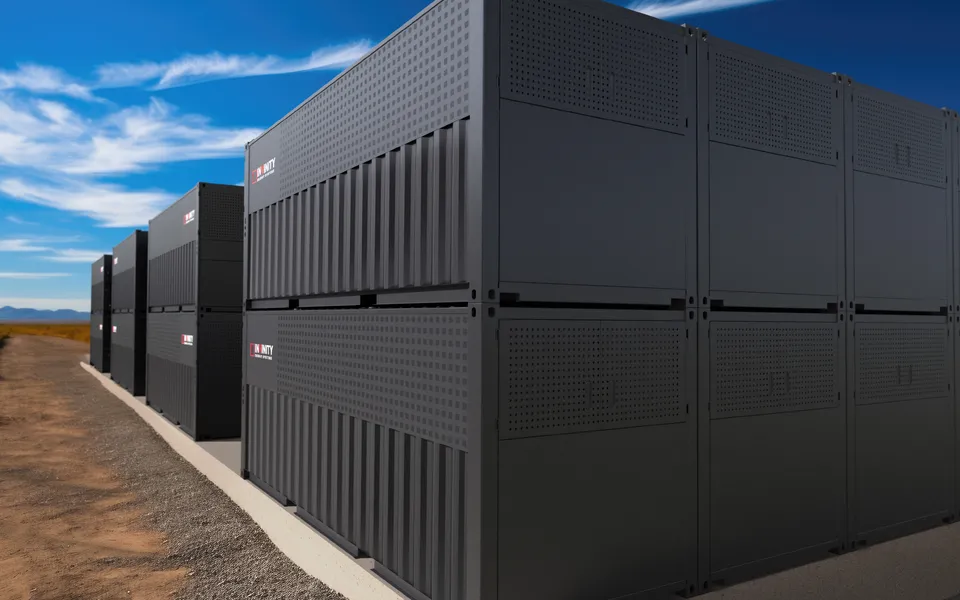
Invinity models front-of-meter and behind-the-meter revenue for its customers' projects in Gridcog, for standalone batteries and hybrid systems with solar and wind.
‘Gridcog lets us model the impact of different scenarios quickly and accurately.’
Developers and independent power producers (IPPs), investors, energy majors and storage technology providers.
Usually eight hours or more. Ofgem uses eight hours as the minimum for Great Britain's LDES cap and floor scheme. In the 2024/2025 T-1 Capacity Market auction, storage of eight hours or more was also in the highest de-rating band. Gridcog's analysts also use 'long(er) duration' for the 4- to 12-hour batteries now modelled in Australia's NEM, where operational batteries were all one to two hours in early 2025.
Lithium-ion batteries, pumped storage hydro, compressed air energy storage and flow batteries. All four are among the 16 projects Ofgem provisionally selected in June 2026, with lithium-ion making up 11 of them. New South Wales' largest long duration storage tender, in February 2026, contracted only lithium-ion batteries, averaging about 10 hours.
When price spreads last long enough to use its full duration, or when it can absorb renewable output that would otherwise be curtailed. In Pete Tickler's 2025 New South Wales model, spreads held for 4 and 8 hours on all three price projections. Longer duration also earns a higher capacity market de-rating. Gridcog tests each duration on your prices, costs and grid connection.
It gives a project a minimum revenue, the floor, topped up through consumer bills if market revenue falls short. Above a cap, extra revenue is shared with consumers. Projects must be able to discharge for at least eight hours. Ofgem opened the first application window in April 2025 and provisionally selected 16 projects on 26 June 2026.
Yes. Gridcog's battery asset represents lithium-ion, flow and other battery chemistries, with settings for round trip efficiency, self discharge, depth of discharge, cycling and degradation. Its flexible parameters can also represent other storage, such as compressed air. Invinity Energy Systems models its vanadium flow batteries in Gridcog for customer projects in the UK, Europe, North America and Australia.
Because capacity markets pay for availability during system stress, and longer storage can keep delivering for longer. Great Britain de-rates storage by duration. In the 2024/2025 T-1 auction, storage of eight hours or more had a de-rating factor of 94.37%, against 11.34% for one-hour storage. Gridcog applies de-rating factors by duration and auction.
Request a live demo
Request a demo and we'll show you how Gridcog compares battery durations for your project.
The team behind Gridcog

Fabian Le Gay Brereton
Chief Executive Officer & Co-Founder
Previously co-founded Greensense, acquired by ERM Power (now Shell Energy).

Pete Tickler
Chief Product Officer & Co-Founder
Co-founded Greensense and led digital innovation at ERM Power (now Shell Energy).

Genna Boyle
Chief Commercial Officer & Head of EMEA
More than 10 years in energy strategy, trading and renewables, with senior roles at Battery Optimiser and Limejump.

