

Solar generation
Model the solar from weather data for the site's location, or upload yield profiles from tools such as PVsyst, and apply degradation over the life of the project.
Community solar is a solar project whose value is shared between many customers rather than used by one site, typically a small-scale solar farm that the community owns or buys into as a group. An electricity retailer often passes the value on to customers.
| Model | How the value is shared | Example in Gridcog |
|---|---|---|
| Community-owned solar farm | The community owns the solar farm, and any battery, and keeps the benefit | AMPERES and Amboranj Power, Western Australia |
| Related: solar on a shared private network | Each home's solar and battery sits on one private network behind a single grid connection | Mangawhai Hills, New Zealand (Revolve) |
| Retailer-facilitated | A retailer combines local generation, storage and energy sharing with its retail supply | Indigo Power's Community Energy Hubs, Victoria |
As one project with the solar, any battery and the commercial arrangements around them. Gridcog simulates generation and dispatch interval by interval, then shows what each owner, retailer and customer pays and earns.
Model the solar from weather data for the site's location, or upload yield profiles from tools such as PVsyst, and apply degradation over the life of the project.
Add a battery to store midday solar for the evening peak, to serve local load or to earn market revenue, and test sizes side by side.
Where customers sit behind the same connection as the solar, add a submeter for each home or business with its own load, so every customer's energy and costs show separately.
Give each customer a retail tariff and set the export rates the project earns, with future rate changes over its life.
Add the community owner, retailer, network and customers as participants, then assign each income and cost to the right party, including percentage splits.
Expose exports to wholesale prices where the project sells into the market, and let solar curtail when prices turn negative.

Scott Bosman
Senior Energy Analyst
Because negative prices tend to arrive when solar output peaks. Gridcog Senior Energy Analyst Scott Bosman found that Victoria had recorded nearly 1,500 hours of negative pricing in 2025 by the end of November, about four times more than five years earlier, often during periods of peak solar generation.
In his model of a merchant 110 MW DC solar farm in Victoria over 20 years, the standalone solar farm ended roughly A$13m in the red. Adding a 50 MW / 4-hour battery turned that into about A$42m of profit, even after an extra A$100m of hardware. The battery shifted exports away from low and negative prices.
Read Scott's analysis: how market dynamics are reshaping standalone solar
Planning a community solar project?
Model how its value is shared
Planning community-owned solar farms and battery storage so remote First Nations communities own their energy supply outright. With Amboranj Power's support, Djarindjin Aboriginal Corporation secured A$5m from JTSI's Lower Carbon Grants Program.
‘Gridcog's ability to model different financial and operational scenarios means we can adjust as needed and keep the communities at the centre of the decision-making process.’

Uses Gridcog for community energy projects with shared assets, private networks and multiple parties, including the Mangawhai Hills development of about 700 homes.
‘We want the energy revolution to deliver lower costs, lower carbon emissions, and meaningful benefits for communities.’
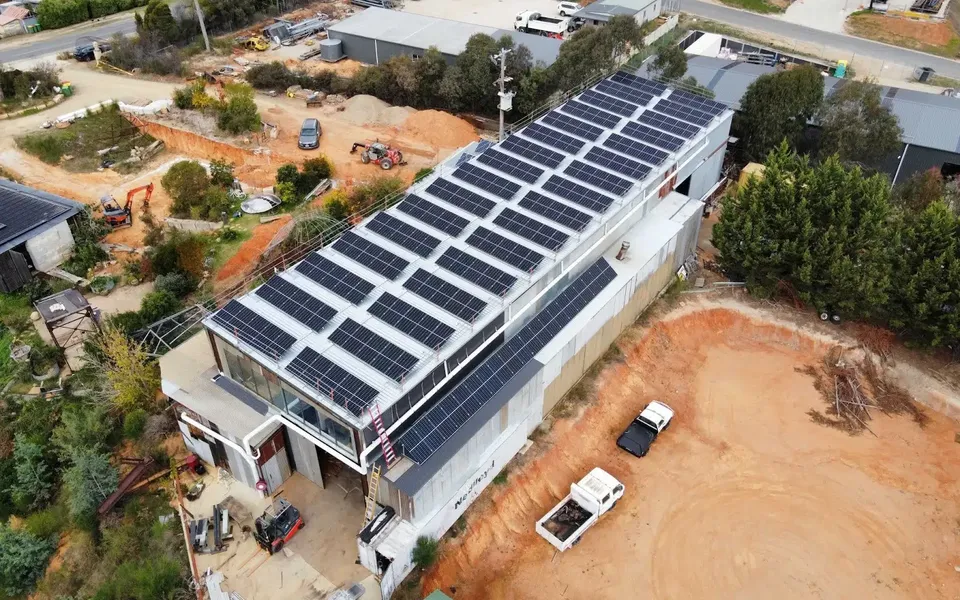
Develops Community Energy Hubs that combine local renewable generation, storage and energy sharing with retail electricity supply, and has used Gridcog to see the costs and benefits of its projects for every stakeholder.
Community energy groups, energy suppliers and retailers, developers and the consultants who advise them.
Who shares the value. Rooftop solar usually serves the building it sits on, and its owner keeps the savings. Community solar shares the value of one solar project, typically a small solar farm that the community owns or buys into, between many customers. Gridcog models both, and each customer's share of the value.
It depends on the model. Customers can benefit as owners sharing the project's returns, or through a retailer that combines local generation with its retail supply. In related models such as Mangawhai Hills, homes share a private network and its grid connection instead. Gridcog models each customer's tariff and each participant's share, so you can test which structure works best.
Yes. Add a battery to the solar farm and Gridcog co-optimises it against the site's connection, prices and tariffs, storing midday solar for later or serving local load. AMPERES and Amboranj Power are using Gridcog to plan community-owned solar farms with battery storage for remote communities that rely on diesel.
Community solar shares the value of solar generation between many customers. A community battery, sometimes called a neighbourhood battery, is a front-of-meter battery on the distribution network that shares the value of storage with local energy users. Many projects combine the two. See community battery modelling.
It varies. Some are owned outright by the community, as AMPERES and Amboranj Power are planning for First Nations communities in Western Australia. Others are group-purchased, or developed by a community-owned energy company such as Indigo Power. Gridcog shows the cashflows for each owner and customer.
Request a live demo
Request a demo and we'll show you how Gridcog models the solar, the customers and the value each of them gets from your community solar project.
The team behind Gridcog

Fabian Le Gay Brereton
Chief Executive Officer & Co-Founder
Previously co-founded Greensense, acquired by ERM Power (now Shell Energy).

Pete Tickler
Chief Product Officer & Co-Founder
Co-founded Greensense and led digital innovation at ERM Power (now Shell Energy).
Genna Boyle
Chief Commercial Officer & Head of EMEA
More than 10 years in energy strategy, trading and renewables, with senior roles at Battery Optimiser and Limejump.

