Unplugged London | 2027 Trends for Hybrid Projects in GB: Co-location, Batteries and Data Centres

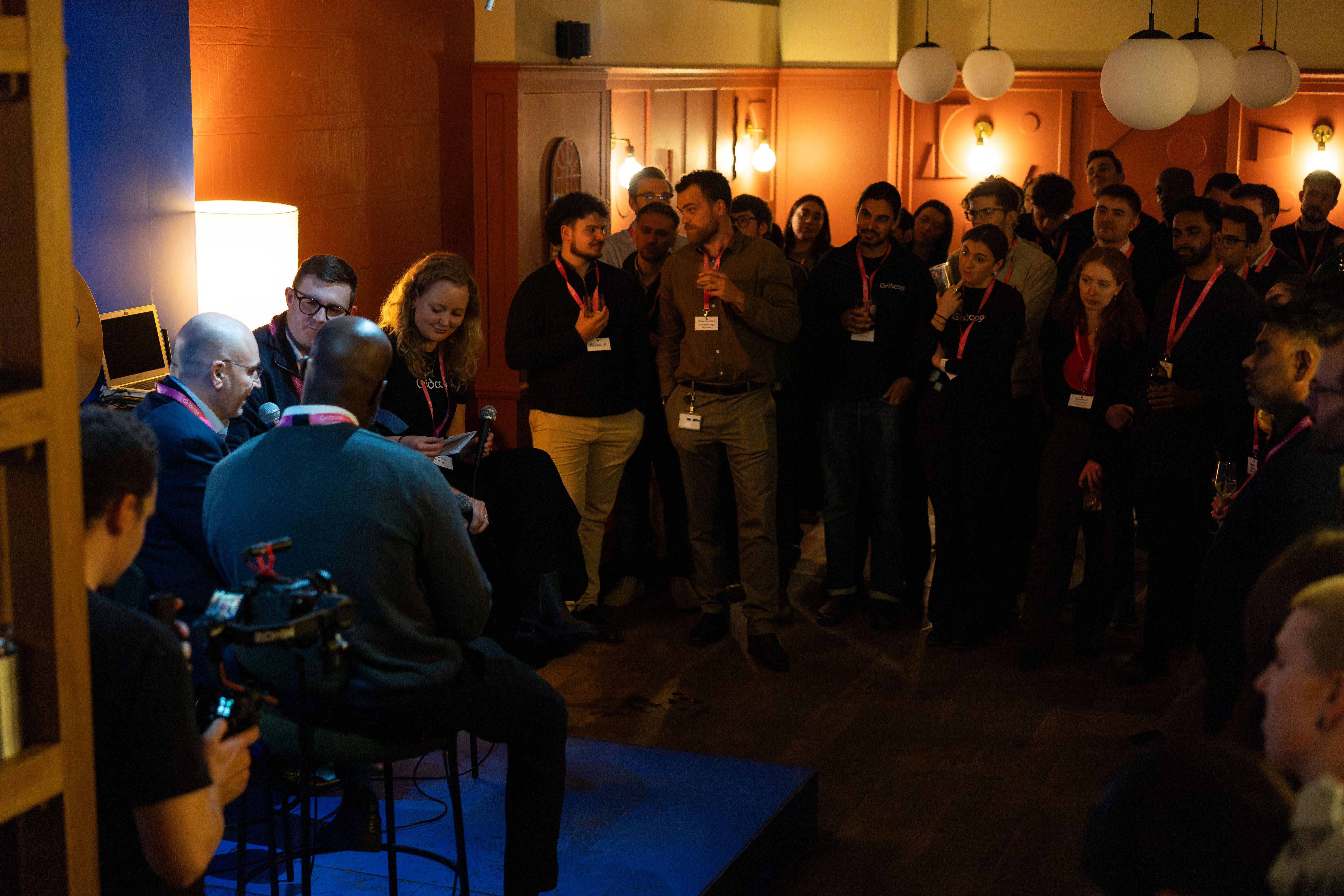
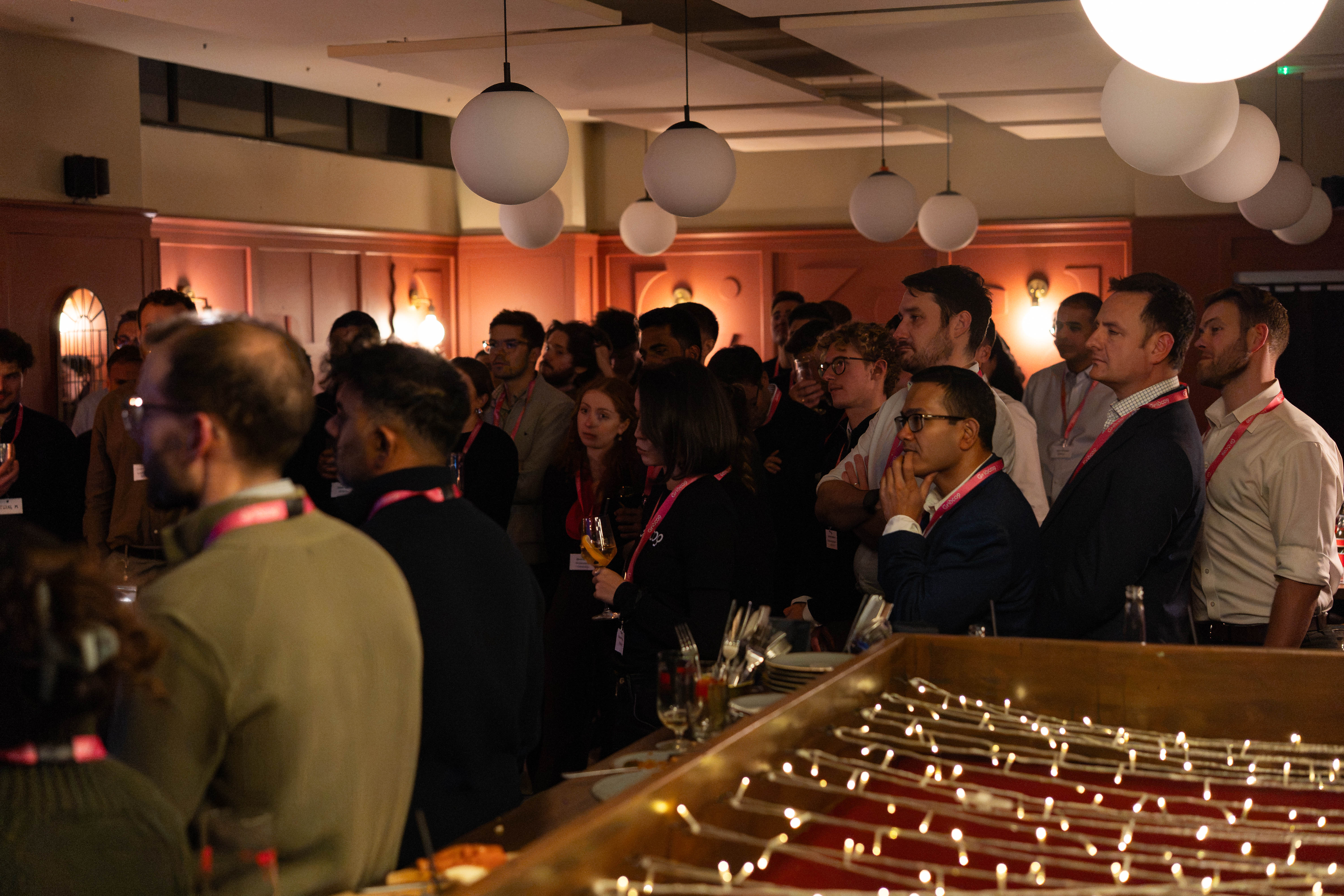
Last week, the Gridcog team gathered in London for our final Gridcog Unplugged of the year.
The topic of the evening was co-location: what it means, why GB has been slower to adopt it than Spain or Germany, and how grid connections, policy and data centres could change that in 2027.
As always, the evening centred on a panel discussion, this time on 2027 trends for hybrid projects in GB. Our panellists were Bruno Brunetti (Head of Renewables Revenue Streams, S&P Global Energy), Mayokun Fowler (Associate Director - Asset Management, Octopus Energy Generation) and Steven Coppack (Power Director, Timera Energy), who brought perspectives from market data and price benchmarking, fund management and commercial advisory. Between them, they covered GB, Spain, Germany, and how policy and regulation could shape project planning over the coming year.
Key Takeaways
Co-location vs hybridisation
A large part of the evening was spent talking about co-location and hybridisation. For anyone less familiar with the terms, co-location usually means two or more assets sharing a site or a grid connection while operating largely independently. Hybridisation goes a step further: the assets run together as one, and are traded and monetised in aggregate. We discussed on the panel how the industry is still settling on the language, and how in Spain, where both connect the same way, the line is blurrier still.
How is co-location changing in GB?
GB is still largely a standalone battery market, built on the capacity market and other established revenue support. But the drivers of co-location are shifting, and they look quite different depending on where you sit:
- Grid scarcity in GB. With connection queues stretching into the next decade, owners are looking to make more use of the connections they already have, particularly at solar sites that sit idle for much of the day.
- Risk management for investors. On merchant projects, a co-located battery can help limit the downside.
- Data centres as large offtakers. Growing demand, and competition for grid connections, is adding a new dimension to how projects are planned and contracted.
The panel also discussed how co-location isn't always simple to add after the fact - where a solar project has already sold its flexibility through a power purchase agreement (PPA), adding a battery can mean going back to the offtaker to renegotiate, which helps explain the slower pace in GB than Spain or Germany for example.
“In Spain or Germany, you’ve got no choice because you’ve fundamentally got solar projects that are being curtailed.”
What does bankability really mean?
Bankability means very different things to different people, and depends as much on risk appetite as on how much revenue is contracted; lenders are looking harder at whether a project can physically deliver what it has contracted, not just whether the contracts are in place. Financing is available at around 50% contracted revenue, and contracting a co-located project fully means giving up some of its upside.
“You can contract away a lot of the merchant risks, but you can then be exposed to some pretty dangerous non-deliveries on those contracts.”
Trading a co-located system also looks different on the ground, with more capacity held back until closer to delivery and less room to chase the last few pounds of spread. Policy will shape a lot of 2027, from connections reform and flexible connection agreements, to how much support standalone assets continue to receive.
Why are grid connections so valuable?
Grid scarcity came up throughout the night. In GB, a new connection can be hard to secure before 2035, while a solar farm might only use its connection around 12% of the time. That makes the connection itself one of the most valuable things a project owns.
“Whenever you put a constraint on something, whenever you restrict the supply of something, you create value in it.”
Policy will shape a lot of 2027, from connections reform to how much support standalone assets continue to receive. The panel discussed asking connection holders to keep showing development progress to retain their connection. Germany has tried moving from first come, first served to a maturity-based queue, with limited change so far. Committing collateral is also harder when a non-firm connection’s terms can change partway through development.
Flexible connection agreements, the focus of our Berlin Unplugged, can make co-location more attractive, since a battery lets owners shift output when the connection is constrained. In GB these are appearing mostly on the demand side for now. Ofgem’s decision on commitment fees will also matter, with a threshold of around 40 MW that could influence how large new sites are built.
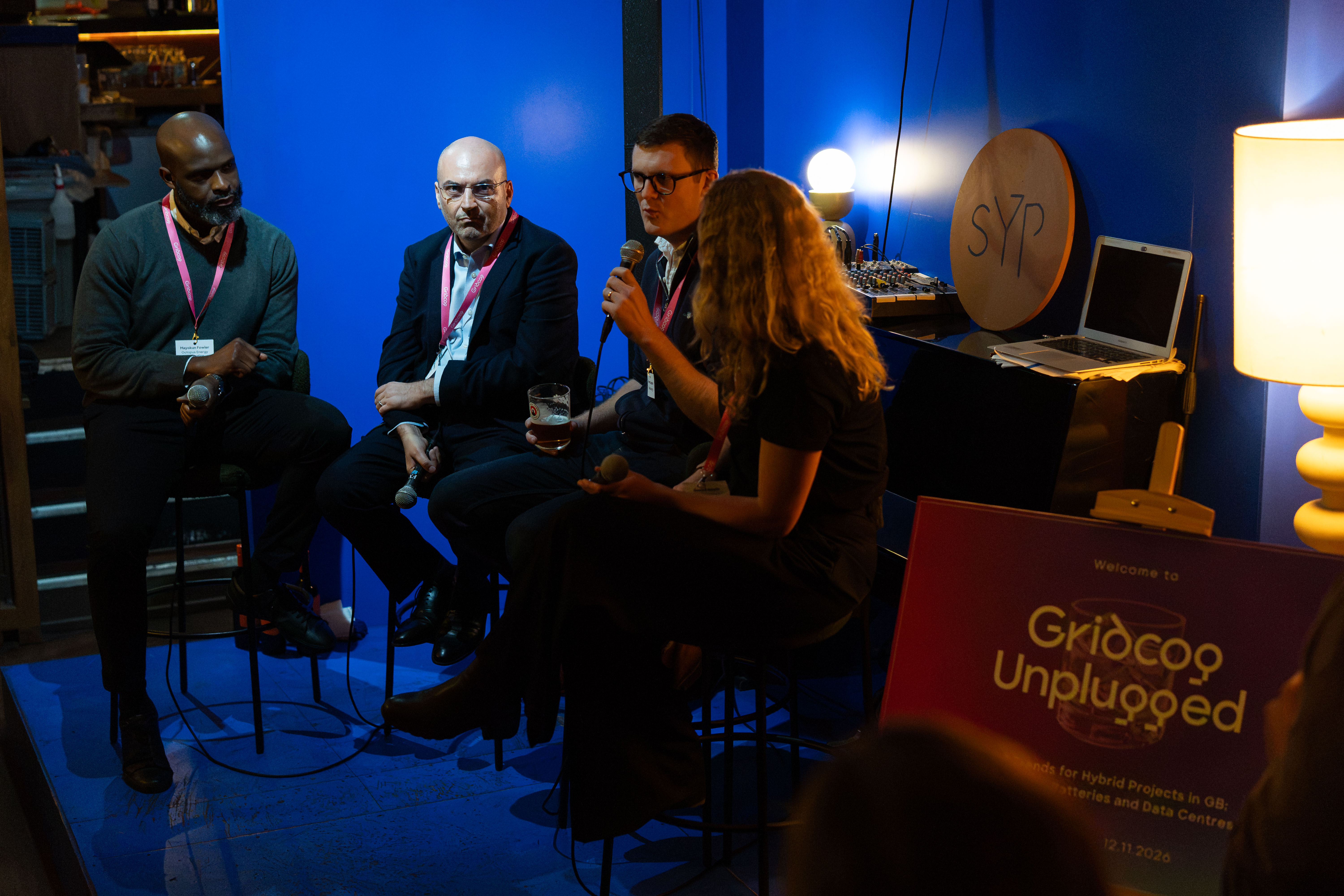
Thanks again to Bruno, Mayokun and Steven for such a wide-ranging discussion, and to everyone who asked questions from the floor. It was great to spend the evening with so many of you, and to end our 2026 Unplugged series in London.
Meet us at our next event!
That's a wrap on Unplugged for 2026, but keep an eye out for more in 2027. We’re looking at you Europe…
Want an invite to the next Gridcog Unplugged? To get early access to tickets, subscribe to our newsletter here.